
Ancient animal reservoirs of zoonotic diseases
Signatures of ancient pathogen DNA reconstructed from prehistoric animal remains extend scope of paleomicrobiology and open a path towards identifying the origins of zoonoses.
• Context: Many human diseases are zoonotic. During the Eurasian Bronze Age (starting ∼5,000 years ago) humans experienced major migrations and the introduction of pastoralism, which likely fostered pathogen spillovers from animals into humans. However, ancient pathogen DNA from animal remains is underexplored and technically challenging.
• Study design: An international and interdisciplinary team identified 346 specimens from primarily domesticated animals across 34 Eurasian sites, many dating to the Bronze Age period, to test for preserved ancient pathogen DNA.
• Targeted sampling: To boost detection, they prioritized bones with paleopathological lesions indicative for past infection (215 bones, 188 with lesions) and included 131 teeth to capture DNA of systemic infections preserved in dental pulp.
• Methodology & findings: Clean-room ancient DNA extraction and sensitive computational screening revealed multiple zoonotic pathogen signatures. Two pathogens (Streptococcus lutetiensis, Erysipelothrix rhusiopathiae) had enough fragments for comparative analysis, confirming ancient authenticity.
• Implications: Lesion-based prioritization enriched for positives and offers a cost-effective strategy, but sampling varied skeletal elements remains crucial. The study provides proof-of-concept for using zooarchaeological ancient DNA to trace reservoirs, spread, and spillover mechanisms of prehistoric zoonoses.
An uncharted path – ancient pathogen DNA from the zooarchaeological record
The majority of human infectious diseases today have a zoonotic origin, meaning they jumped from animals into humans. Different lines of evidence suggest that the Eurasian Bronze Age starting around 5,000 years ago was a pivotal period when many zoonoses emerged that still exist today. Anne Kathrine W. Runge, lead author of the study says: “The Bronze Age period was characterized by major human migrations and, importantly, the widespread adoption of pastoralism – a type of subsistence based on domesticated animals. While it is hypothesized that this may have paved the way for the emergence of zoonoses, ancient pathogen DNA investigations of animal remains is so far largely lacking.”
The reconstruction of ancient pathogen genomes from animal remains – the zooarchaeological record – faces additional challenges compared to the more established ancient pathogen genome reconstruction from human remains. “During prehistory the majority of animals were slaughtered while being healthy; butchered animals were heated during food preparation and discarded animal parts were more exposed to the environment – all in all lowering the likelihood of pathogen DNA identification.” says Felix M. Key, research group leader at the Max Planck Institute for Infection Biology and senior author of the study. “However,” he adds “ancient pathogen reconstruction from the zooarchaeological record holds unique potential for elucidating the reservoirs of prehistoric zoonotic diseases, the geographic spread, and the genetic mechanisms facilitating spillover into the human population.”
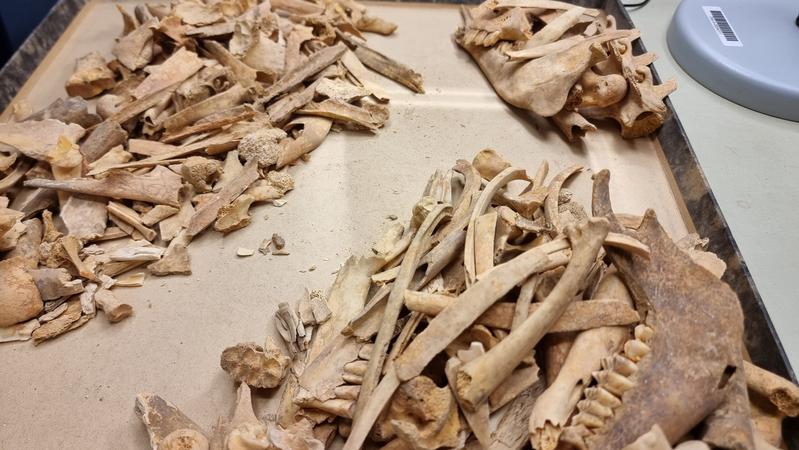
Here an international, interdisciplinary team of experts set out to explore the possibility of ancient pathogen DNA identification from the zooarchaeological record. In a study now published in the journal Nature Communications the authors tested 346 specimens of primarily domesticated animals from 34 archeological sites across Eurasia – many of which from the Bronze Age – for the preservation ancient pathogen DNA.
Paleopathologies for prioritizing specimen collection
The generation of ancient DNA is costly and the analysis hampered by archeological samples without any DNA signature for pathogens – an aspect likely elevated when investigating animal specimens. In this study skeletal material was selected primarily from domesticated animals from sites across Eurasia, including Poland, Germany, Czech Republic, Romania, and Uzbekistan to test whether zoonotic pathogen DNA can be recovered from prehistoric animal remains. In order to make the screening effort more targeted, specimens were selected that showed signs indicative for the presence of disease and trauma, known as paleopathological lesions. “I examined hundreds of specimens to detect windows of potential infection, seen as lesions, to increase the chances to recover ancient pathogen DNA of zoonotic diseases”, emphasizes Kamilla Pawłowska, a paleopathology expert from Adam Mickiewicz University, Poznań and senior author of the study. She adds: “I discovered, among others, lesions of inflammatory and traumatic origin, which was pivotal to keep the molecular investigation feasible”. In total, 215 skeletal elements were selected for analysis of which 188 bones had lesions. Moreover, because the dental pulp chamber is a known source of ancient DNA from systemic pathogens that often leave no paleopathological lesions, an additional 131 teeth were selected for ancient pathogen DNA investigation.
Pathogen DNA identification and authentication
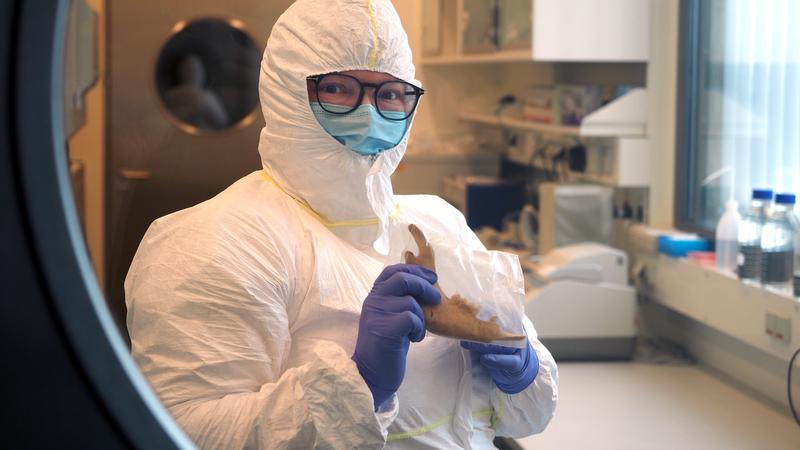
Following the archival work, all selected specimen were transferred to a clean room facility at the Max Planck Institute for Infection Biology for molecular biology work. “Extracting ancient DNA from skeletal elements requires a clean room and personal protective equipment, a demanding precaution that is necessary to minimize the risk of contaminating samples with modern DNA,” says ancient DNA expert Anne Kathrine W. Runge. Following the sequencing of the DNA extracted from each sample the genetic data was screened for ancient pathogen DNA fingerprints using a previously developed highly sensitive computational methodology. “We were pleased to discover ancient DNA signatures for many different zoonotic pathogens, though the amount of ancient DNA was mostly insufficient to reconstruct a genome and do in-depth comparisons to the diversity of these same pathogens in modern livestock and humans” says Ian Light-Maka, a co-author and bioinformatician. Nevertheless, two zoonotic pathogens, Streptococcus lutetiensis causing mastitis and Erysipelothrix rhusiopathiae leading to skin infection, had sufficient ancient DNA fragments for such an analysis. “The inferred relationships confirm the ancient authenticity and provide further credence to the possibility of identifying prehistoric pathogen genomes from animal remains,” Light-Maka adds.
Among the specimen positive for pathogen DNA, most carried identified pathological lesions. “That primarily specimen end up positive that showed lesions indicative for infectious diseases validates our prioritization scheme and helps future investigations to select specimen despite financial constraint. However, it remains important to sample different skeletal parts as the biology of pathogens differs and many pathogens, for example during blood-stream infections, may be identifiable best in other elements like teeth”, Kamilla Pawłowska emphasizes. All authors highlight that this study demonstrates the importance of animal paleopathological investigations and reinforce a multifaceted approach to reconstructing health in the past.
Future work in ancient pathogen genomes, reconstructed from animal but also human remains hold great promise to better understand the origin of contemporary zoonotic diseases. With large collections of animal remains remaining untapped for investigations of pathogens Felix M. Key summarizes that “With the pendulum in ancient pathogen genomics swinging towards non-human host species, our study provides an important proof of work in this nascent field to better understand the emergence of human infectious diseases”.
Wissenschaftlicher Ansprechpartner:
Anne K. Runge, ak@palaeome.org
Ian Light-Maka, light@mpiib-berlin.mpg.de
Kamilla Pawłowska, koka@amu.edu.pl
Felix Key, key@mpiib-berlin.mpg.de
Originalpublikation:
Title: Probing the zooarchaeological record across time and space for ancient pathogen DNA
Authors: Anne Kathrine W. Runge*, Ian Light-Maka, Ken Massy, Marcel Keller, Simon Trixl, Helja Kabral, Casey L. Kirkpatrick, Kirsten Bos, Jana Eger, Michal Ernée, René Kyselý, Michael Hochmuth, Dominik Poradowski, Aleksander Chrószcz, Norbert Benecke, David Daněček, Jana Klementová, Anatoli Nagler, Alexey A. Kalmykov, Anatoly R. Kantorovich, Vladimir E. Maslov, Andrey B. Belinskiy, Christiana L. Scheib, Meda Toderaş, Svend Hansen, Philipp W. Stockhammer, Kai Kaniuth, Regina Uhl, Sabine Reinhold, Rosalind E. Gillis, Elizabeth A. Nelson, Kamilla Pawłowska*, Felix M. Key*
* Co-correspondence
Publication: Nature Communications
DOI: 10.1038/s41467-026-71543-4
Ähnliche Pressemitteilungen im idw
