
The body’s internal clock does not tick at the same rate for everyone
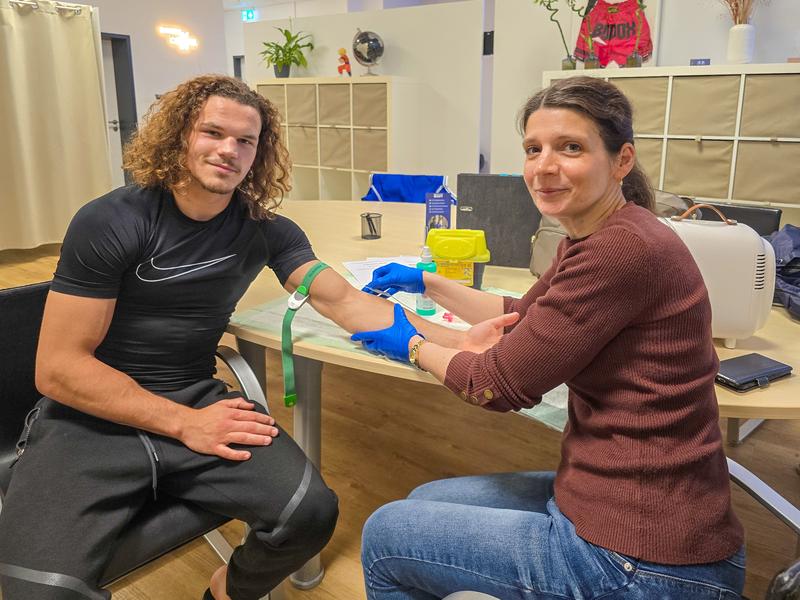
A research team at Hannover Medical School (MHH) is investigating biological ageing processes in MMA fighters. The aim of the study is to gain a more detailed understanding of the epigenetic clock of ageing.
Some people age faster than others. But how can biological age be reliably measured? A research team at Hannover Medical School (MHH) is investigating this question in a study on the biological clocks of martial artists who practise the full-contact combat sport of Mixed Martial Arts (MMA). Biological age can differ significantly from actual chronological age. Factors such as lifestyle, diet, exercise and stress influence how quickly the body ages. The aim of the study is to identify reliable markers that can be used to determine biological age.
“To date, there is no clear-cut measure of biological age,” explains study leader Dr Kirsten Jahn, PhD, from the Molecular Neuroscience group at the MHH Clinic for Psychiatry, Social Psychiatry and Psychotherapy. “In our study, we aim to identify biological age clocks that can accurately reflect a person’s state of health.” Such markers could enable preventive diagnoses and treatments.
Epigenetic patterns as a measure of age
There is still no scientific consensus on exactly how biological age can be determined. One promising approach is so-called DNA methylation. This biochemical process influences which genes are active and which are not. To do this, cells attach small chemical markers – so-called methyl groups – to the DNA, which act like fine-tuning controls. They do not alter the genetic code itself, but rather its functionality. These epigenetic patterns change over the course of a person’s life. Researchers use these changes to draw conclusions about a person’s biological age.
The MHH team is relying on a new technology that simultaneously analyses all relevant DNA segments capable of controlling gene activity through methylation – such as the 28 million so-called CpG sites. “This allows us, for the first time, to comprehensively assess the methylation pattern and decipher the epigenetic clock of ageing more accurately,” explains Dr Jahn.
MMA fighters as an exceptional study model
MMA fighters provide an unusual but highly suitable model for research into biological age. They go through phases of highly fluctuating physical and psychological stress – ranging from moderate training and intensive competition preparation to extreme stress before and during a fight. “MMA fighters are healthy individuals who are occasionally exposed to very strong influences that could have an epigenetic effect on biological age,” says Dr Jahn.
During the recovery phase, factors that inhibit ageing, such as light training and a normal diet, tend to prevail. In the competition phase, factors that promote ageing, such as intense training loads and diets, dominate. In the days leading up to a competition, fighters even restrict their fluid intake to reach the ideal weight class. The researchers suspect that these fluctuating stresses have a direct effect on biological clocks: during the recovery phase, they may tick more slowly; during the competition phase, more quickly – and thus become detectable in repeated blood analyses.
Research between the ring doctor’s practice and laboratory analysis
“As a ring doctor, I have been supporting MMA and other martial arts athletes for many years under a wide range of physical and psychological stresses,” says Dr Panagiotis Karachalios, a specialist in orthopaedics and trauma surgery well-known in the German and European MMA scene. “The study offers the chance to better understand how these stresses affect health and recovery in the long term, what conclusions can be drawn from this, and how we can further improve the medical care of athletes in the future.”
Study participants can have MRI scans of their heads taken before and after fights. The researchers aim to use this to investigate possible injuries and changes in brain ageing. Data on well-being, proteins and metabolic products is also being collected. The research team is comparing these results with data from amateur MMA athletes who do not compete, as well as from healthy older adults. Previous markers of ageing are also being incorporated into the analysis, including some less comprehensive ‘age clocks’ as well as telomere lengths – that is, the length of the protective caps at the ends of chromosomes. The team is also investigating whether the martial art strengthens mental resilience.
Wissenschaftlicher Ansprechpartner:
For further information, please contact Dr Kirsten Jahn, PhD, Laboratory for Molecular Neuroscience at the Department of Psychiatry, Social Psychiatry and Psychotherapy, telephone +49 511 5327275, Jahn.Kirsten@mh-hannover.de.
Ähnliche Pressemitteilungen im idw
