50 Years of the Jung Prize for Medicine: Hamburg’s First Mayor Tschentscher Honors Anniversary at City Hall
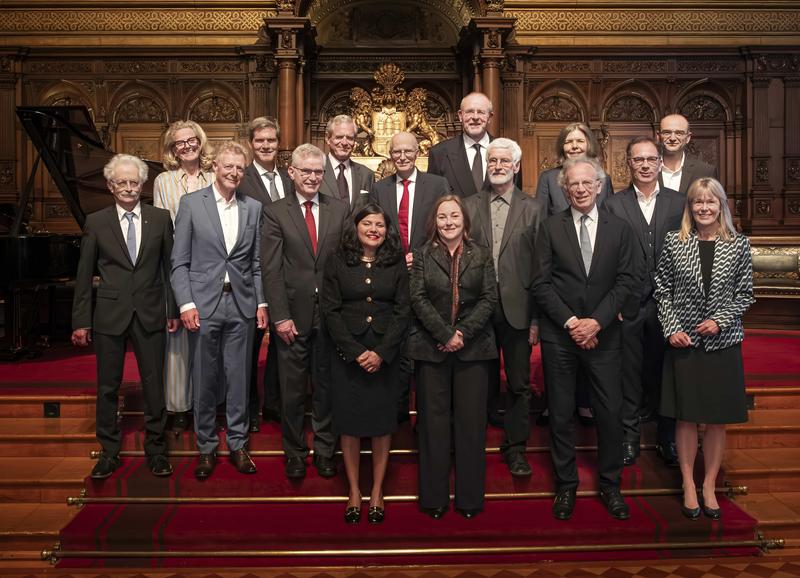
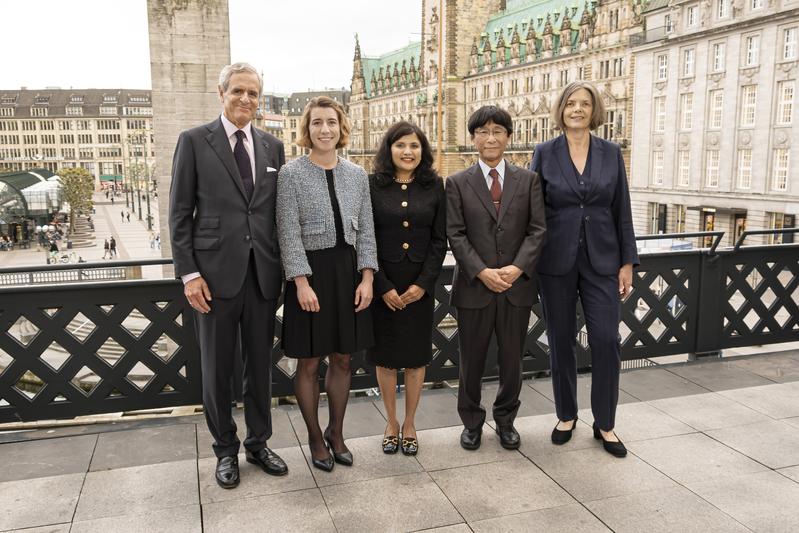
Official Senate Reception at Hamburg City Hall: On May 21, 2026, Hamburg’s First Mayor Dr. Peter Tschentscher honored the 50th anniversary of the Jung Prize for Medicine with a reception in the Grand Ballroom of Hamburg City Hall.
Independent funding since 1976: The Jung Prize for Medicine has been awarded since 1976; the prize money is granted without restrictions, enabling research with a high degree of scientific freedom.
Impact across decades: Awarded research has had a lasting influence on medicine – including Nobel Prize-winning discoveries and breakthroughs such as CRISPR-Cas9 and mRNA technology.
Since 1976, the Hamburg-based Jung Foundation for Science and Research has awarded the Jung Prize for Medicine. For five decades, the prize has ranked among the most prestigious and highly endowed medical awards in Europe. On Thursday, May 21, 2026, Hamburg’s First Mayor Dr. Peter Tschentscher honored this anniversary with an official Senate Reception at Hamburg City Hall. The reception underscores Hamburg’s role as a center of science and research that promotes outstanding scholarship and strengthens international networks. The Jung Foundation connects Hamburg with globally recognized scientific excellence and helps ensure that advances in medicine originating in Hamburg continue to inspire progress around the world.
Hamburg’s First Mayor, Dr. Peter Tschentscher: “For 50 years, the Jung Prize for Medicine has contributed to promoting science and research, recognize outstanding achievements, and thereby encourage young medical professionals to apply their talent and dedication to the field of medicine, develop new ideas, and break new ground. The Jung Foundation’s award ceremonies, symposia, and fellowships draw attention to Hamburg as a hub for medical research and science. I would like to sincerely thank the Foundation for its commitment and its work.”
Independent Research – and the Freedom that Enables Medical Innovation
One defining characteristic of the Jung Prize for Medicine is its unwavering commitment to independent funding: the prize money is awarded without conditions. Laureates are free to define their research topics, concepts, and methods independently, allowing them to respond flexibly to new developments and pursue unconventional ideas without bureaucratic constraints. Particularly in human medicine, where scientific insights often require years before reaching diagnostics and therapy, this freedom creates the foundation for long-term impact.
“For 50 years, the Jung Prize for Medicine has followed one simple principle: for us, support is never an end in itself. It is also always an expression of responsibility – toward science and society, toward history and the future. Responsibility means two things at once: respecting the freedom of research while also standing up for the conditions under which it can create meaningful impact.” Jochen Spethmann, Chairman of the Board of Trustees of the Jung Foundation for Science and Research.
The Jung Prize for Medicine: A Landmark Award
The development of medicine over recent decades can be traced through the work recognized by the Jung Prize for Medicine. Emmanuelle Charpentier received the Jung Prize before being awarded the Nobel Prize together with Jennifer Doudna in 2020 for the CRISPR-Cas9 gene-editing technology – an innovation that has opened new possibilities for the treatment of genetic diseases. Immunologist Rolf Martin Zinkernagel was later honored with the Nobel Prize for his groundbreaking discoveries on immune recognition of virus-infected cells, which laid the foundation for modern vaccination strategies and immunotherapies. Özlem Türeci’s pioneering work in mRNA research contributed significantly to the development of mRNA-based COVID-19 vaccines and continues to hold promise for applications in infectious diseases and oncology.
“The history of the Jung Prize for Medicine demonstrates the impact of foresight in research funding. The prize recognizes work that combines scientific excellence with clinical relevance – often long before its significance becomes visible in everyday medical practice. Its international standing rests on this ability to identify outstanding quality at an early stage while simultaneously creating the freedom needed for the next steps.” Professor Thomas Boehm, Chairman of the Scientific Advisory Board of the Jung Foundation for Science and Research
Award Ceremony Held on the Same Day
Also on May 21, 2026, the Jung Foundation presented its 2026 medical awards during a ceremonial dinner at the Hanse Lounge in Hamburg: this year’s Jung Prize for Medicine was awarded to Professor Rohini Kuner (Heidelberg); the Jung Career Advancement Award honored early-career scientist Dr Fiona Kolbinger (Dresden); and Professor Taroh Kinoshita (Osaka) received the Jung Gold Medal for Medicine in recognition of his lifetime achievements.
Weitere Informationen:
https://jung-stiftung.de/en/press/
Ähnliche Pressemitteilungen im idw
