Autism risk in premature babies: Earlier diagnoses and more targeted therapies made possible
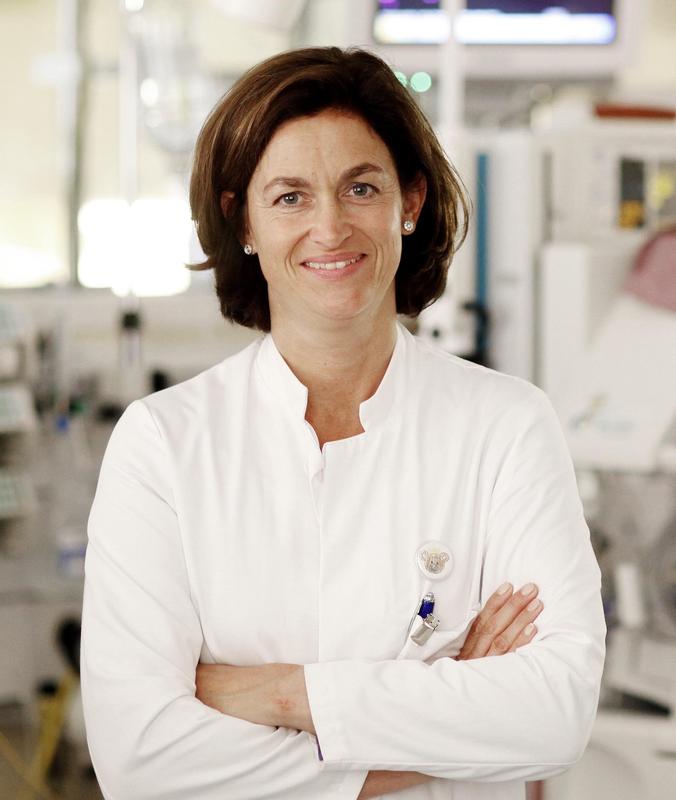
Researchers at the Medical Faculty of the University of Duisburg-Essen aim to be able to predict the risk of autism in preterm born babies earlier and make more targeted therapies possible. They are part of the “Perinatal Neurosciences / Neonatal Follow-up Care” working group at the Department of Pediatrics I of the University Hospital Essen and are involved in the collaborative project MICRO-NEST. This project is funded with EUR 6 million as part of the EU framework program Horizon Europe. Of this, EUR 350,000 will go to the Essen research site. The project will begin on September 1, 2026, and will run for five years.
In Europe, around one in every 70 children is diagnosed with autism—often late due to a lack of effective early detection indicators. Around 10 percent of all children are born before the 37th week of pregnancy, and small premature babies are at least three times more likely to be at risk. “People with autism show functional disturbances in the brain, immune system, and gut, but the underlying mechanisms and relationships are not yet understood,” says Prof. Dr. Ursula Felderhoff-Müser, Director of the Department of Pediatrics I. This is where she and her team come in; crucial data is being provided from Essen.
The scientists are pooling data from large cohort studies focusing on autism and prematurity. The goal is to develop a data-driven model that simulates individual risks and disease progressions in autism. With the help of this digital twin, early prognostic markers and new starting points for more targeted therapies are expected to emerge. This will improve the quality of life and participation for people with autism and their families.
One of the strengths of the Essen site is an exceptionally well-characterized cohort of more than 1,000 very prematurely born children who were born before the 32nd week of pregnancy and weighed less than 1,500 grams at birth. Essen is part of an international consortium consisting of 16 partner institutions, including institutions from the UK, Sweden, and France.
Project partners:
Institut National de la Santé et de la Recherche Médicale (coordination), France
Royal Melbourne Institute of Technology – Europe, Spain
University Medical Center Utrecht – Utrecht University, Netherlands
Medical Faculty of the University of Duisburg-Essen – University Hospital Essen, Germany
King's College London, England
University of Edinburgh, Scotland
Maastricht University, Netherlands
University of Rostock, Germany
University of Gothenburg, Sweden
Unapei, France
Global Foundation for the Care of Newborn Infants, Germany
Dresden University of Technology, Germany
Genos Ltd, Croatia
University of Geneva, Switzerland
Inserm Transfer SA, France
RMIT University, Australia
Disclaimer:
Funded by the European Union. Views and opinions expressed are however those of the author(s) only and do not necessarily reflect those of the European Union. Neither the European Union nor the granting authority can be held responsible for them.
Wissenschaftlicher Ansprechpartner:
Prof. Dr. Ursula Felderhoff-Müser, University Hospital Essen, Director of the Department of Pediatrics I, ursula.felderhoff-mueser@uk-essen.de, Tel. +49 0201/723-2451
Ähnliche Pressemitteilungen im idw
