
Three Perspectives on the Medicine of Tomorrow
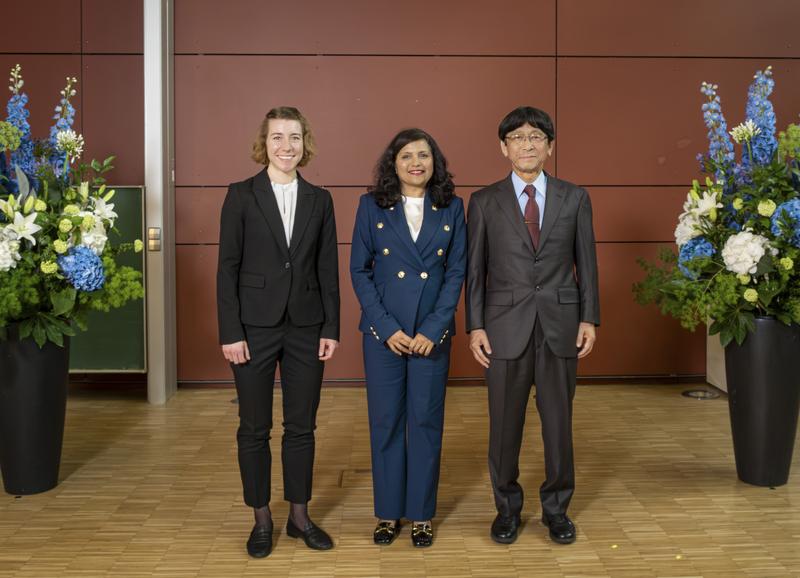
Talks from the Jung Symposium 2026 on AI-assisted surgery, rare diseases and pain research now available on YouTube
Artificial intelligence for more precise decision-making in cancer surgery, new insights into the molecular causes of rare diseases, and innovative approaches to the treatment of chronic pain: these were the key topics of the Jung Symposium “Excellence in Human Medicine 2026”. The presentations by internationally renowned researchers are now available on the Jung Foundation’s website and YouTube channel, offering insights into current developments at the interface of basic research and clinical application.
“Surgery 2.0: Artificial Intelligence-Based Personalized Decision-Making in Oncologic Surgery”
👉 Dr Fiona Kolbinger’s presentation: https://www.youtube.com/watch?v=iGOjXygBysY&t=19s
“Invisible Link: Molecular Mechanisms of GPI Anchoring and Their Role in Rare Diseases”
👉 Prof Taroh Kinoshita’s presentation: https://www.youtube.com/watch?v=v6GwXCmcqXw
“When the Nervous System Learns Pain: Neuroplasticity as a Therapeutic Approach for Improved Treatment”
👉 Prof Rohini Kuner’s presentation: https://www.youtube.com/watch?v=Zh5VHKXW21U
AI for More Individualised Decision-Making in Cancer Surgery
How artificial intelligence can be used to tailor surgical decision-making more closely to individual patients is the focus of Dr Fiona Kolbinger’s presentation, “Surgery 2.0: Artificial Intelligence-Based Personalized Decision-Making in Oncologic Surgery”. A physician and researcher at the Department for Visceral, Thoracic and Vascular Surgery at the Carl Gustav Carus University Hospital and Faculty of Medicine, TUD Dresden University of Technology, Dr Kolbinger explains how data-driven models can analyse treatment outcomes and generate personalised decision-support tools for oncologic surgery. Particular attention is given to the question of how procedures for rectal cancer can be planned more precisely and how complications can be reduced.
New Insights into the Molecular Basis of Rare Diseases
Prof Taroh Kinoshita of the University of Osaka explores the importance of GPI anchors for processes at the cell surface and their role in rare diseases. In his presentation, “Invisible Link: Molecular Mechanisms of GPI Anchoring and Their Role in Rare Diseases”, the researcher from the Center for Infectious Disease Education and Research (CiDER) presents current findings on the molecular mechanisms underlying these cellular structures. A better understanding of these processes could help classify rare and complex diseases more accurately in the future and improve our understanding of their biological causes.
Neuroplasticity as a Target for Improved Pain Therapies
Prof Rohini Kuner of Heidelberg University examines why pain can become chronic and what therapeutic opportunities arise from this understanding. In her presentation, “When the Nervous System Learns Pain: Neuroplasticity as a Therapeutic Approach for Improved Treatment”, the researcher from the Institute of Pharmacology at Heidelberg University’s Faculty of Medicine explains how neural networks change in response to persistent stimuli. These neuroplastic processes contribute to the amplification and persistence of pain. Understanding these mechanisms opens up new avenues for therapies that target the development of chronic pain more effectively.
The three presentations illustrate how contemporary medical research spans the spectrum from fundamental biological mechanisms to concrete applications in diagnosis and treatment.
6th Jung Symposium 2026
With a well-attended auditorium at the University Medical Center Hamburg-Eppendorf (UKE) and numerous international viewers joining via livestream, the 6th Jung Symposium once again underscored its commitment to making outstanding research visible and accessible. The event brought together leading researchers from a range of disciplines and addressed scientific topics of significant current relevance. The lively exchange with the audience and the many questions following the presentations highlighted the strong interest in the research topics discussed and the value of an interdisciplinary forum that opens up new perspectives across disciplinary boundaries.
Weitere Informationen:
https://jung-stiftung.de/en/symposium-2026-en/
https://www.youtube.com/watch?v=iGOjXygBysY&t=19s
https://www.youtube.com/watch?v=v6GwXCmcqXw
https://www.youtube.com/watch?v=Zh5VHKXW21U
Ähnliche Pressemitteilungen im idw
