
Why climate disasters hit people in some regions particularly hard

Study shows that social vulnerability often matters more than climate hazard intensity
OR: Social vulnerability outweighs hazard intensity in shaping climate disaster impacts
People living in regions with lower scores on the Human Development Index face a substantially higher risk from climate-related disasters, even when these are not unusually severe. This is the key finding of a new study led by researchers at Leipzig University. The study analysed more than 7,000 climate-related disasters worldwide between 1990 and 2020 and combined this data with subnational indicators of human development.
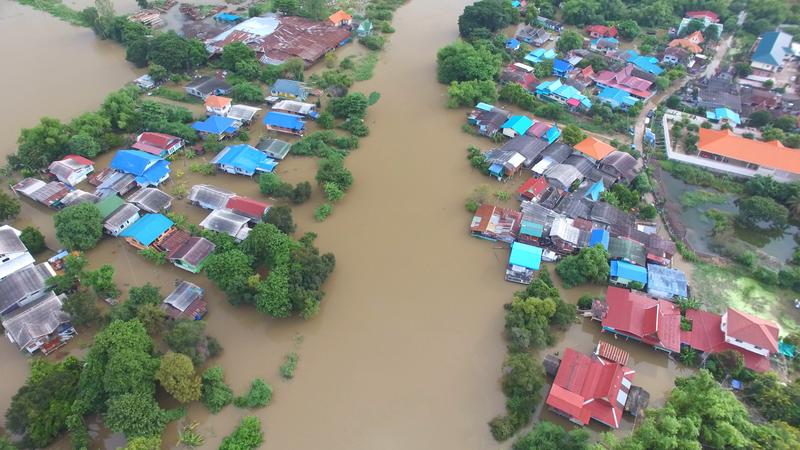
The results show that the impacts of climate-related disasters are not determined by the strength of the hazards alone. Instead, socio-economic conditions strongly influence how severely people are affected. Regions with low Human Development Index scores experienced disproportionately higher human losses across most disaster types, especially for floods and storms. For storms, people in low-development regions face an average fatality risk more than eight times higher than those in very highly developed regions; for floods, the risk is three times higher.
“Our results show that climate disaster risk is not only a question of how intense the hazard is. It is also a question of who is exposed to it, and under what social conditions they live,” says Khalil Teber, a research fellow at Leipzig University’s Institute for Earth System Science and Remote Sensing and lead author of the study. “Particularly in countries that experienced rapid socio-economic development in recent decades, for instance India or China, where you live matters a lot in defining how severe the impacts of a disaster could be.”
A key innovation of the study is that it examines these effects on a global scale whilst drawing on subnational data, which allows for a highly detailed assessment. This is important because, on the one hand, climate-related disasters rarely affect entire countries, and on the other hand, socio-economic conditions can vary significantly across regions. By using this subnational human development data, the researchers showed that inequalities within countries further amplify disaster risk. In low- and medium-development regions, people living in areas that lag behind their national average are particularly vulnerable.
Ensuring climate adaptation measures are fair and effective
“This is an important finding for climate adaptation and disaster risk reduction,” says Professor Miguel D. Mahecha of Leipzig University, senior author of the study. “If we want adaptation to be fair and effective, we need to understand vulnerability at the regional level. And we need high-precision socio-economic data on societal vulnerabilities to understand where people are most at risk.”
At the global scale, the share of disaster exposure in low-development regions has declined over the past three decades, reflecting development progress in many parts of the world. Nevertheless, low-development regions continue to experience disproportionately high human losses. The study therefore emphasises that reducing vulnerability and strengthening adaptive capacity remain among the most effective ways to reduce future disaster impacts.
“According to the projections, climate hazards will continue to intensify in many parts of the world,” says Professor Melanie Krause, who contributed to the study from a socio-economic perspective. “But their humanitarian consequences are not fully predetermined. Investments in human development, infrastructure, and preparedness in general can save lives.”
The study was an interdisciplinary collaboration of researchers from Leipzig University involving researchers from the Institute for Earth System Science and Remote Sensing, the Leipzig Institute for Meteorology, the Faculty of Business and Economics, and the Helmholtz Centre for Environmental Research (UFZ). It was supported by the European Commission project eXtreme Events: Artificial Intelligence for Detection and Attribution (XAIDA), and the European Space Agency project Adaptation and Resilience to Climate Extremes and Multi-hazard Events (ARCEME)
Wissenschaftlicher Ansprechpartner:
Khalil Teber
Institute for Earth System Science and Remote Sensing
Leipzig University
Email: khalil.teber@uni-leipzig.de
Prof. Dr. Miguel D. Mahecha
Institute for Earth System Science and Remote Sensing
Leipzig University
Email: miguel.mahecha@uni-leipzig.de
Originalpublikation:
https://www.nature.com/articles/s41467-026-73873-9
“Inequality in human development amplifies climate-related disaster risk”, Nature Communications
Weitere Informationen:
https://xaida.eu/
https://rsc4earth.de/project/arceme/
Ähnliche Pressemitteilungen im idw
