
Sovereign Cloud-Edge Services for Europe’s Technological Independence
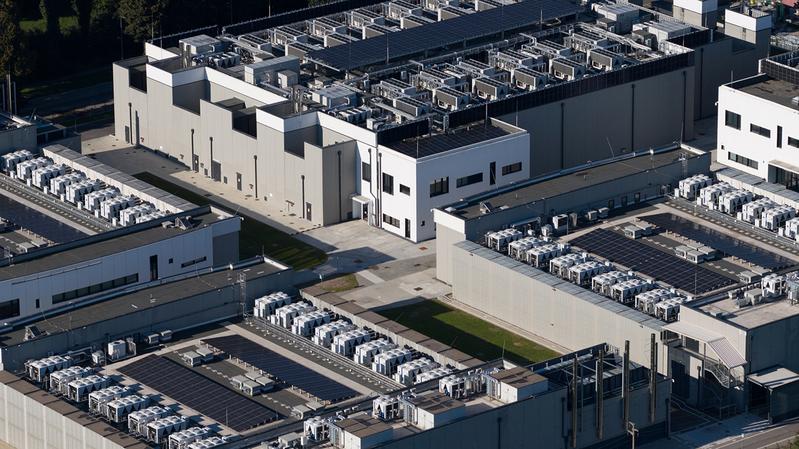
US technology giants dominate the cloud market, threatening the technological sovereignty, data privacy and innovative capacity of European companies. In the project ApeiroRA, the Fraunhofer Institutes for Software and Systems Engineering ISST and for Applied and Integrated Security AISEC are supporting software company SAP in safeguarding Europe’s technological and economic independence in the cloud and edge computing sector. The partners are developing an open-source blueprint for a European, vendor-neutral cloud-edge infrastructure that guarantees interoperability between different providers.
The digital transformation of European companies and public authorities is increasingly dependent on global cloud providers. In the area of cloud infrastructure in particular, US hyperscalers such as Microsoft, Amazon and Google dominate the market with a combined market share of 70 percent. This significantly limits Europe’s technological sovereignty, innovative capacity and regulatory control. In order to reduce this dependence and close the digital gap, the European Commission is promoting open-source projects such as SAP’s ApeiroRA. Through the Apeiro Reference Architecture, the project provides key technology components and an open-source blueprint for a European, provider-independent cloud-edge infrastructure. The project is being run under the IPCEI-CIS (Important Project of Common European Interest – Cloud Infrastructure and Services) initiative.
Fraunhofer ISST and AISEC are providing technological support to SAP in building a sustainable multi-provider cloud-edge continuum for Europe. In doing so, they are able to draw on longstanding expertise and build on previous work carried out within Fraunhofer CCIT (Cluster of Excellence Cognitive Internet Technologies), whose research focuses on establishing a sovereign edge-cloud continuum. They have also spent many years developing data spaces that enable sovereign data exchange between companies. “Fraunhofer is the right partner for us because it consistently combines scientific excellence with implementation expertise. This capability is particularly important in the Apeiro project, where we’re gradually transforming a complex reference architecture into tangible solutions and pilot applications. The partners complement each other exceptionally well: SAP contributes industrial application expertise and scalability, while Fraunhofer brings methodological depth and a structured approach to developing new concepts. Taken together, this creates the foundation for robust, practical technologies,” says Andreas Schlosser, Apeiro Coordinator for Partnerships & Integrations at SAP SE.
Moving workloads to where they can be handled most efficiently
“Europe has fallen behind in the global market for public cloud services,” says Heinrich Pettenpohl, Head of IT Service Providers at Fraunhofer ISST. “That’s not the case in the area of cloud-edge computing. This is why the European Commission is pursuing a strategy of promoting smaller, decentralized data centers, known as cloud edges, giving European companies direct access to infrastructure for storing their data.” The advantage is that data processing is shifted from large-scale data centers directly to the edge of the network, i.e., close to the data source. These edge-cloud data centers can be located virtually anywhere, whether at the base of a wind turbine, in an industrial yard or in a manufacturing facility. This minimizes latency, conserves bandwidth and enables real-time analytics, while the cloud continues to serve as a central repository and platform for complex long-term analyses. At the same time, it creates an alternative to the centralized cloud systems operated by Amazon and other major providers. The major open-source project ApeiroRA is creating a secure, vendor-neutral European cloud-edge continuum that seamlessly combines central cloud data centers and decentralized cloud edges into a single intelligent IT infrastructure. It dynamically distributes workloads to where they can be handled most efficiently.
ApeiroRA: flexible and interoperable
Fraunhofer’s contribution to ApeiroRA involves the development and prototypical implementation of scalable, secure and automated lifecycle management for cloud and edge services. Its responsibilities include developing modular systems for cloud and edge services that can operate seamlessly across different providers and applications, thereby increasing flexibility and interoperability.
In order to ensure security and compliance, data privacy and adherence to regulatory requirements, state-of-the-art security strategies such as zero trust principles and confidential computing are being implemented. “We’re integrating a security architecture in the Apeiro Reference Architecture that incorporates zero trust principles and confidential computing so as to enable secure, interoperable identity and access management, as well as technology-independent workload attestation in federated multi-provider environments, meaning IT ecosystems in which services, resources and identities from different providers are seamlessly connected,” says Michael Weiss, a research scientist at Fraunhofer AISEC. Rather than relying on proprietary siloed solutions, independent systems collaborate through open standards and trust relationships (federations), allowing them to function as a single platform. One of the ways this will be achieved is by implementing trusted execution environments, technology-independent integrity verification of software stacks and the principle of least privilege in access management.
Resource efficiency through the use of digital twins
Fraunhofer researchers are also working on a framework for the comprehensive analysis of resource consumption, the collection and forecasting of sustainability metrics and the generation of recommendations for resource-efficient configurations. “By moving cloud services to locations where energy is available—particularly renewable energy—we can make the system more sustainable. Through the use of digital twins, we aim to optimize resource consumption and implement sustainable IT configurations,” explains Pettenpohl. The agenda also includes the development of autonomous root cause analysis capabilities and AI-supported operations management to reduce administrative effort and increase efficiency. “Fraunhofer’s contributions are vital to the project, ranging from automated, compliance-ready operating models to approaches based on zero trust principles and confidential computing to new concepts such as digital twins and AI-supported system optimization,” says Andreas Schlosser. “This work is not just technologically innovative: More than anything, it creates verifiable and transferable solutions that will ensure greater independence, transparency and long-term competitiveness for Europe.”
The project’s key results will feed directly into the NeoNephos Foundation, which, as part of the Linux Foundation Europe, is dedicated to promoting open-source projects aligned with the strategic objectives of the EU’s IPCEI-CIS initiative. This will make NeoNephos a key building block in strengthening Europe’s independence in the cloud and edge computing sector.
Weitere Informationen:
https://www.fraunhofer.de/en/press/research-news/2026/august-2026/sovereign-cloud-edge-services-for-europes-technological-independence.html
Ähnliche Pressemitteilungen im idw
