
Wildlife researcher explains how wild animals behave during a solar eclipse
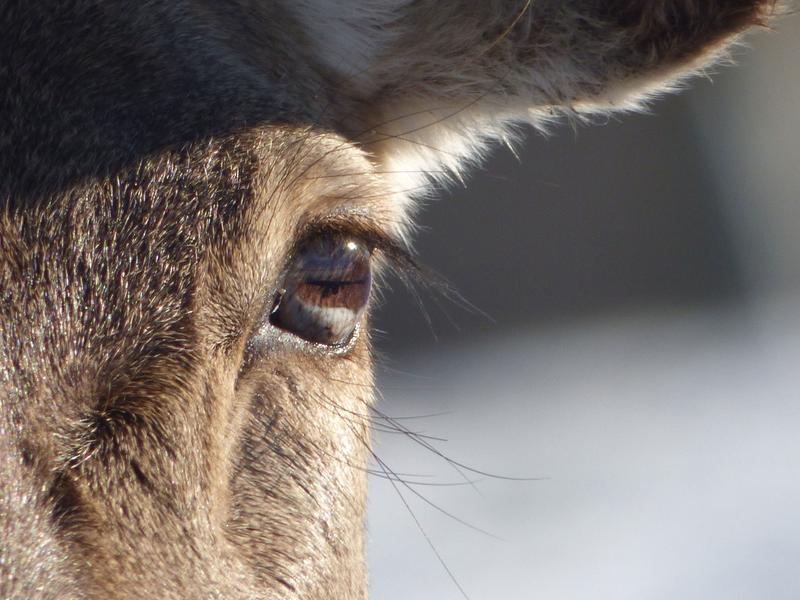
How do animals in the wild react when it suddenly gets dark in the middle of the day? Wildlife ecologist Prof. Dr Ilse Storch explains in an interview what behaviour wild animals exhibit during a solar eclipse and how researchers are using this rare event as a “natural experiment.”
Dr Storch, how do wild animals react to a solar eclipse? Does it confuse them when it suddenly gets dark in the middle of the day?
First of all: A solar eclipse means a deviation in the course of the usual external time cue, daylight, and possibly also in the associated temperature. There are significant differences in the amount of light throughout the day and even between days, to which animals constantly react. Therefore, a solar eclipse will be less of a "big deal" for animals than it is for us.
Research predominantly describes evening behaviour as the reaction to a total solar eclipse, sometimes also uncertainty, or even no discernible reaction at all. Birds may reduce their singing activity during a solar eclipse, diurnal animals may exhibit evening behaviour, while nocturnal animals may become more active.
What insights do researchers gain from the behaviour of animals during a solar eclipse?
For researchers, solar eclipses are “natural experiments” that can provide insights into reactions to light stimuli that could otherwise only be gained from smaller species in the laboratory. This offers great opportunities for scientific research.
In 2018, for example, researchers studied a solar eclipse in the USA. Using data from 143 weather radar stations, they recorded the flight activity of birds and insects over a large area. During the total solar eclipse phase – that is, the complete obscuration of the sun by the moon – normal flight activity decreased significantly, thus reducing the “normal” daily activity. However, the solar eclipse was not sufficient to trigger nighttime activity comparable to that at sunset.
Do these scientific findings also apply to a partial solar eclipse, like the one we can observe in Germany today?
Today's partial solar eclipse won't make it completely dark. Furthermore, it will only be visible shortly before sunset. This means it will simply get dark a little earlier and a little faster, which means we don’t expect any aberrant reactions from wildlife.
About Prof. Dr Ilse Storch
Prof. Dr. Ilse Storch She studied biology at RWTH Aachen University and Ludwig Maximilian University of Munich (LMU). After a research year in Sweden and completing her doctoral dissertation in the Alps, she worked as a researcher and lecturer at the Technical University of Munich (TUM), where she earned her habilitation in ecology and conservation biology. She has conducted research on almost every continent, providing consulting and teaching services on wildlife-related topics, and led the IUCN's Grouse Specialist Group for over 20 years. Since 2004, she has been Professor of Wildlife Ecology and Management at the University of Freiburg. Ilse Storch and her team focus on the impact of humans on wildlife and aim to contribute to a scientifically sound basis for wildlife management and the conservation of biodiversity.
Contact
E-Mail: ilse.storch@wildlife.uni-freiburg.de
Contact
University and Science Communications
University of Freiburg
Tel.: +49 761 203 4302
E-Mail: kommunikation@zv.uni-freiburg.de
Weitere Informationen:
https://uni-freiburg.de/en/wildlife-researcher-explains-how-wild-animals-behave-during-a-solar-eclipse/
Ähnliche Pressemitteilungen im idw
