
A single application of anti-mosquito coating reduces the long-term risk of dengue
• Study conducted by medical researchers in Freiburg shows: fewer cases of dengue fever in Colombia thanks to an innovative water tank coating
• The cost is two US dollars per year per fuel tank
• The findings could help in the fight against tiger mosquitoes in Germany
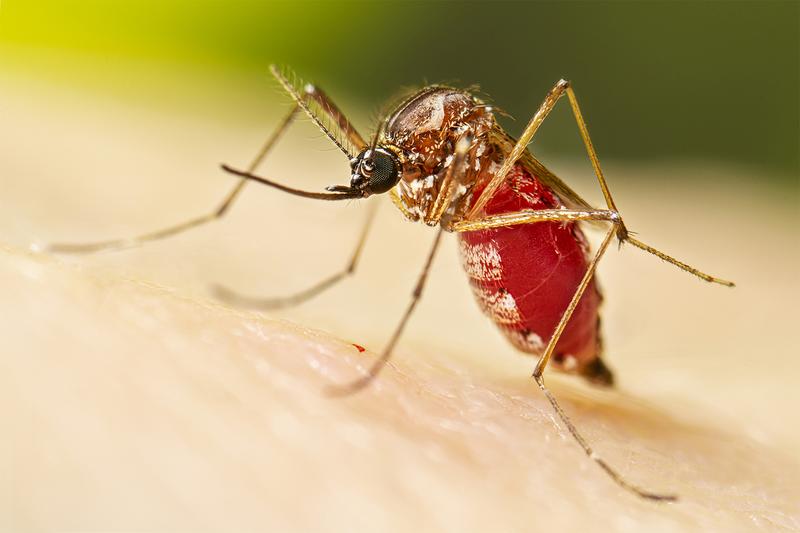
A single application applied to water containers can significantly slow down the number of yellow fever mosquitoes (Aedes aegypti) – and thus the spread of dengue fever – for many months. This has been demonstrated by researchers from the Faculty of Medicine at the University of Freiburg in a study published on 19 August in the specialist journal The Lancet Infectious Diseases. The study shows that cases of dengue fever fell by 45 per cent more in Colombian neighbourhoods with specially coated water tanks than in comparable control areas. The findings are also of interest to Germany, where the closely related Asian tiger mosquito (Aedes albopictus) has become established in many regions.
“Our findings show that we can protect many people from dengue infection through a relatively simple measure. By targeting breeding sites, we can significantly reduce the burden of disease,” says project leader Prof. Dr Axel Kroeger, a researcher at the Institute for Infection Prevention and Hospital Hygiene at Medical Centre - University of Freiburg and a member of the Centre for Planetary Health at the University of Freiburg. “The principle can be applied quite easily worldwide. It could also help in Germany in the fight against the Asian tiger mosquito,” says Kroeger.
Dengue fever is on the rise worldwide. Every year, an estimated 100 to 400 million people are affected by this mosquito-borne viral infection. Whilst most infections are mild, severe cases can be fatal. Climate change, urbanisation and the spread of the tiger mosquito are also increasing the risk of local outbreaks in Europe.
Protection for two US dollars per year
In the Colombian city of Cúcuta, 20 urban areas, each comprising around 1,600 to 2,000 households, were compared. One year after treatment, significantly fewer cases of dengue fever (337 cases per 100,000 inhabitants) were recorded in the areas where the coating had been applied than in the control areas (529). The proportion of homes containing mosquito larvae or pupae also fell significantly. The direct costs amounted to around two US dollars per year per tank. Previous safety studies also showed that water from treated containers posed no health risk to humans.
Microcapsules release the active ingredients slowly
“The coating targets the places where the dengue mosquito Aedes aegypti breeds most frequently: in water containers in and around homes,” explains lead author Dr Rocio Cardenas, whose PhD thesis in the Department of Infectious Diseases at the Clinic for Internal Medicine II at the Medical Centre - University of Freiburg formed part of the study. In Colombia, large washing tanks are among the most important breeding sites. “One active ingredient kills adult mosquitoes and inhibits their egg-laying. A second prevents the development of larvae and pupae,” says Cardenas. Microcapsules release the active ingredients slowly, keeping the coating active for over 12 months.
“The study makes a valuable contribution to global infection prevention. It is a prime example of how the ‘planetary health’ approach can bring added value to people worldwide. The concept was developed for a specific region, but has international relevance,” says Prof. Dr Philipp Henneke, spokesperson for the Centre for Planetary Health at the University of Freiburg and Medical Director at f the Institute for Infection Prevention and Hospital Hygiene at the Medical Centre – University of Freiburg.
The coating could also be useful in Germany
The findings are also of interest to Germany. The closely related Asian tiger mosquito Aedes albopictus, which is becoming increasingly widespread here, – like the Aedes aegypti studied in Colombia – prefers to use water containers as breeding sites. These include, for example, rain barrels in gardens and allotments. One of the substances used to combat its larvae is the biological agent Bti. This must be reapplied in water containers every two weeks.
“A coating that remains effective for many months could significantly reduce the burden on households and local authorities,” says Kroeger. The results cannot be directly applied to Germany. As well as the species of mosquito, the climate, container types and control programmes also differ. Nevertheless, Kroeger says: “A do-it-yourself solution for Europe is certainly conceivable once the paint has been approved.”
The study also involved medical staff from the Department of Infectious Diseases at the Clinic for Internal Medicine II and the Institute of Virology at the Medical Centre – University of Freiburg, as well as an international research team.
Further information about the study
Original title: Epidemiological impact of a dual-action insecticidal coating applied to Aedes aegypti breeding sites on dengue transmission in Colombia: a cluster-randomised trial
Journal: The Lancet Infectious Diseases
Publicatio date: 19. August 2026
DOI: 10.1016/S1473-3099(26)00363-4
To the original publication: https://www.thelancet.com/journals/laninf/article/PIIS1473-3099(26)00363-4/fulltext
INFO BOX: Dengue on the rise in Europe and around the world
Dengue is no longer confined to tropical regions. Effective mosquito protection remains crucial for travellers, whilst at the same time tiger mosquitoes are making local transmission more likely even in Europe.
The Medical Centre – University of Freiburg has compiled information on its website dedicated to information about the global spread of dengue infections and how to protect oneself against the disease.
For more information about the Medical Centre- University of Freiburg: https://www.uniklinik-freiburg.de/en/press/publications/im-fokus/dengue-on-the-rise-in-europe-and-around-the-world.html
Originalpublikation:
https://www.thelancet.com/journals/laninf/article/PIIS1473-3099(26)00363-4/fulltext
Weitere Informationen:
https://uni-freiburg.de/en/a-single-application-of-anti-mosquito-coating-reduces-the-long-term-risk-of-dengue/
Ähnliche Pressemitteilungen im idw
