Successful Greenhouse Gas Monitoring Project ITMS Proceeds to Preparation of Operational Phase

The Collaborative Project “Integrated Greenhouse Gas Monitoring System for Germany (ITMS)”, funded through the BMFTR, met for its 4th General Assembly at the Max Planck Institute for Biogeochemistry in Jena to present and discuss recent scientific progress and results. The three-day meeting concluded with the official kick-off of Phase 2, which builds on the successful completion of the first project phase and marks the next step towards the operational monitoring of Germany’s greenhouse gas sources and sinks.
From September 29 to October 1, 2026, around 70 participants from the ITMS consortium, its Scientific Advisory Board, and invited institutions gathered at the Max Planck Institute for Biogeochemistry (MPI-BGC) in Jena.
The Integrated Greenhouse Gas Monitoring System for Germany (ITMS) aims to independently quantify the sources and sinks of the three most important long-lived greenhouse gases (GHGs): carbon dioxide (CO₂), methane (CH₄), and nitrous oxide (N₂O). To achieve this, ITMS combines different sources of information: Atmospheric observations of GHG concentrations from the ground, aircraft, and satellites are matched with detailed bottom-up information on anthropogenic and natural GHG sources and sinks, as well as with atmospheric transport modelling and inverse modelling methods. This jointly enables spatially and temporally resolved estimates of GHG fluxes. Such reliable information is important for understanding changes in emissions and assessing progress towards Germany's climate targets.
Four years of scientific development have laid the groundwork:
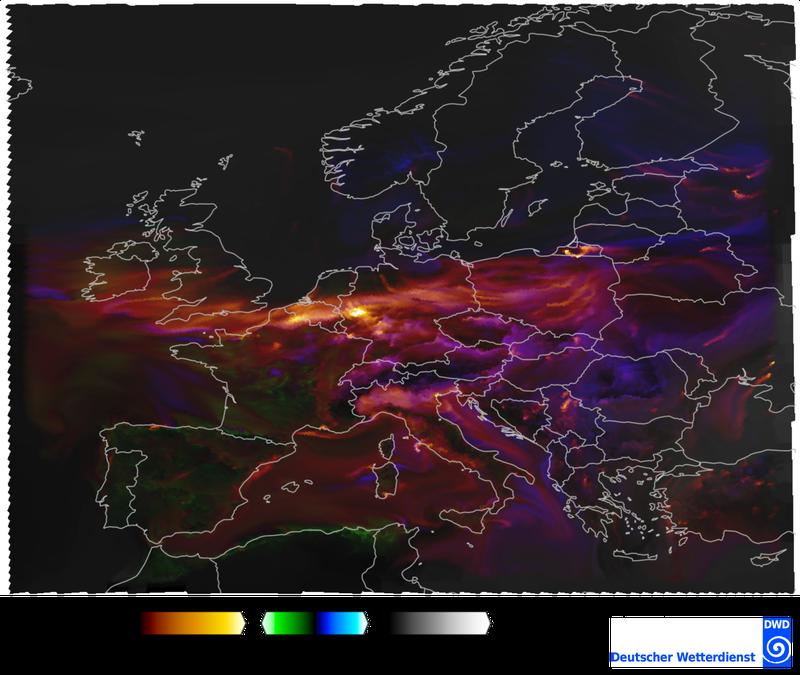
Major scientific and technical advances achieved across the modules in Phase 1 were presented and discussed. The main outcome was the successful implementation of the ITMS Demonstrator at the German Weather Service (DWD), bringing together the key elements necessary for independent GHG monitoring.
Concretely, ITMS expanded and improved multiple observational data streams and developed advanced modelling tools to generate consistent, high-quality estimates of CO₂, CH₄ and N₂O sources and sinks. Together with atmospheric inverse modelling, these developments enabled independent estimates of biogenic CO₂ and anthropogenic CH₄ to be regularly compared with Germany’s national greenhouse gas inventories. The resulting discrepancies were discussed with the national inventory agencies, supporting efforts to better understand and reconcile differences between the approaches and ultimately strengthen the information available for greenhouse gas reporting.
“During Phase 1, we developed and successfully tested the key components of ITMS. The next challenge is to bring these components together into an integrated, robust system suitable for operational use and capable of regularly providing information on GHG sources and sinks. This is what we want to achieve with the ITMS First Generation,” says Christoph Gerbig, MPI-BGC, Jena.
Beyond the scientific advances, the Scientific Advisory Board highlighted the close collaboration across institutions and disciplines developed in Phase 1 as an important strength of ITMS and a foundation for successfully integrating the different components of the system in Phase 2.
Phase 2 develops the ITMS First Generation:
The official kick-off of Phase 2 was announced at the final meeting day. . Following opening remarks from Sonja Baron from the German Federal Ministry of Research, Technology and Space (BMFTR), and the welcome message from Alrik Selle from the German Federal Ministry of Transport (BMV), the consortium presented the objectives of the new phase and the planned contributions of each ITMS module.
“This year’s hot summer has prompted numerous inquiries from Parliament about the need for climate protection measures. ITMS provides an important scientific basis for these discussions, helping to inform decisions on targeted measures with robust GHG information,” says Sonja Baron, BMFTR.
During Phase 2, the ITMS components will be further optimized and increasingly integrated into the ITMS First Generation operational framework. This will include i) advancing the atmospheric inversion system towards a reproducible processing chain for operational use; ii) strengthening and expanding observational data streams, including through new satellite missions such as Sentinel-5, GOSAT-GW and CO2M,; iii) further developing information on GHG sources and sinks through the provision of harmonised, spatially and temporally resolved, sector-specific emission estimates with quantified uncertainties; and iv) developing user-oriented ITMS products for long-term operational uptake. A central development will be the establishment of the ICON-ART-based ITMS system as a community research tool, providing access for multiple user groups and allowing new scientific developments to continuously feed into the operational ITMS.
“In Phase 1, we built the technical foundations of the ITMS Demonstrator by making use of modelling tools and infrastructure developed for numerical weather prediction. An important focus going forward will be strengthening the connection with Germany’s national GHG inventory development by improving approaches for reconciling ITMS results with the national inventories in close collaboration with the German Environment Agency (UBA) and the Thünen Institute, to support national GHG reporting,” says Andrea Kaiser-Weiss, DWD, Offenbach.
The development of the ITMS First Generation over the next four years is a key step towards establishing sustained operational greenhouse gas monitoring in Germany. At the same time, the resulting system and data products are intended to provide a long-term resource for the research community, supporting further scientific development and new research questions.
Wissenschaftlicher Ansprechpartner:
Dr. habil. Christoph Gerbig
Groupleader
Max Planck Institute for Biogeochemistry
Phone: +49-3641 57-6373
Email: cgerbig@bgc-jena.mpg.de
Prof. Dr. Sönke Zaehle
Managing Director
Max Planck Institute for Biogeochemistry
Phone: +49-3641 57-6300
Email: szaehle@bgc-jena.mpg.de
Weitere Informationen:
https://www.fona.de/de/aktuelles/nachrichten/2026/10/261002_ITMS_Kick-Off_Phase-II.php BMFTR-FONA website
Ähnliche Pressemitteilungen im idw
