Too valuable to drain away: Nutrients in irrigation water
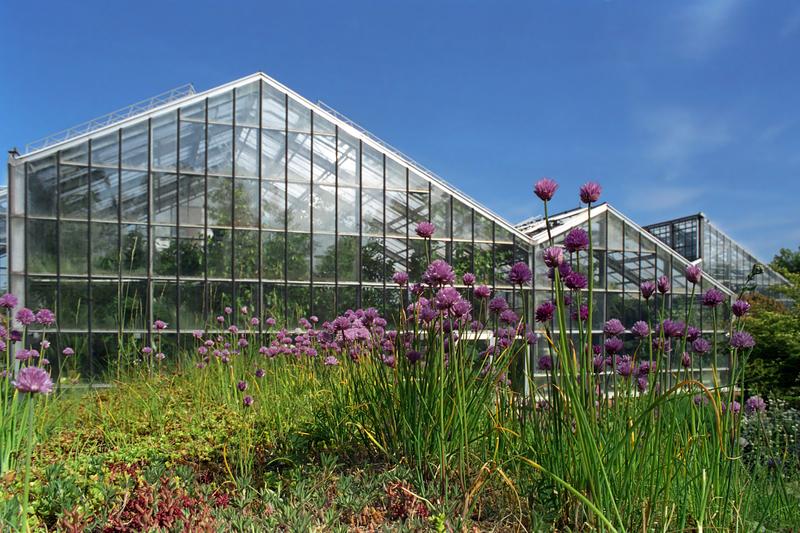
A new sensor system aims to show which nutrients are present in greenhouse irrigation water. In the new German-Danish Interreg project NutriCycle, researchers are developing an optical measurement method. With a total budget of €1.8 million, the project aims to help growers use water and fertiliser more efficiently and reduce nutrient discharges into wastewater.
In greenhouses, growers supply their plants with water to which they add specific mineral nutrients. The water circulates in closed loops and needs to be replaced regularly. In the process, nutrients that could still be available to the plants are often lost. The new German-Danish research project NutriCycle is investigating how these losses can be reduced. Scientists at Kiel University (CAU) and the University of Southern Denmark (SDU) are developing an automated sensor system designed to detect individual plant nutrients in the water.
Until now, irrigation measurements have only provided an estimate of the total amount of dissolved salts in the water, based on a single measurement. However, they do not reveal which nutrients are present in excess or which are lacking for the plants. A more detailed analysis could help growers supply their plants more precisely while saving water and fertiliser. It could also reduce nutrient discharge into wastewater: when nitrogen and phosphorus compounds enter bodies of water, they can promote algal growth and reduce oxygen levels in the water.
The project is led by Professor Casper Kunstmann at SDU. At Kiel University, Professor Martina Gerken is leading the project. The three-year project has a total budget of approximately 1.8 million euros, of which around 1.2 million euros comes from the Interreg Deutschland-Danmark funding programme. NutriCycle also involves the German research company NPZ Innovation in Schleswig-Holstein, the Danish water and wastewater company VandCenter Syd, and the Danish horticultural consultancy HortiAdvice.
Individual nutrients instead of overall measurements
To reliably distinguish individual nutrients from one another, the team is developing a new measurement method. Researchers at SDU are using microfluidics to analyse very small amounts of water in a chip. Chemical reactions make the nutrients present visible through changes in colour.
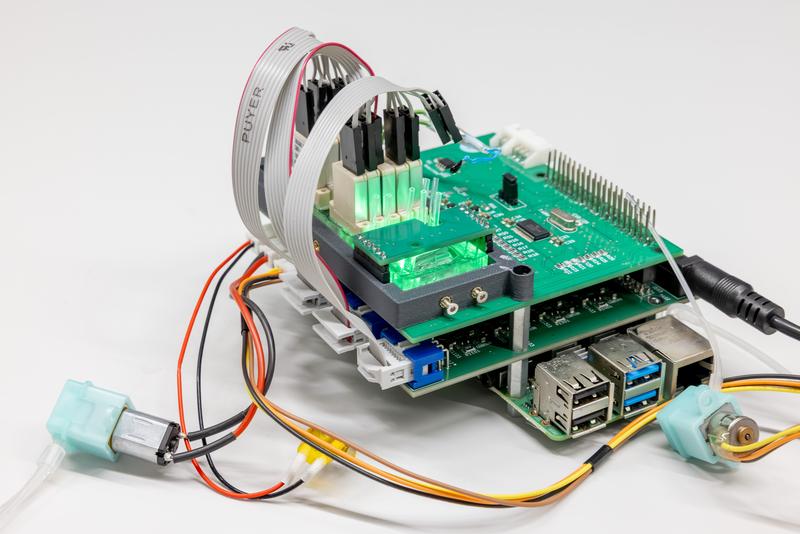
Gerken's research group in Kiel is developing the optical sensors that detect these colour changes. The system then uses this data to calculate how much of a particular nutrient the water contains. To do this, the researchers are building a measurement chamber with light sources and sensors, as well as a compact unit that controls the measurement and analyses the data.
Initially, the team wants to determine how much nitrate the wastewater contains, as nitrate is an important source of nitrogen for plants. Other nutrients are to be added later. The key difference is that growers currently have to send water samples to a laboratory to determine individual nutrient levels. NutriCycle aims to carry out this process automatically, directly in the greenhouse water circulation system. This could enable growers to fertilise more precisely, recycle water and prevent valuable nutrients from being lost unused.
“I am very much looking forward to the German-Danish collaboration. With SDU, we are bringing together our expertise in microfluidics. By the end of the project year, we aim to present an initial laboratory prototype suitable for use in a greenhouse,” says Gerken.
In the long term, the researchers want to develop a compact, robust and relatively inexpensive device that can be connected to greenhouse irrigation systems. In future, it is intended to work with the digital platform InfoGrow, which already allows users to control temperature, heating, lighting and shading.
Growers, companies, researchers and other interested parties are invited to the project kick-off on 28 October 2026 in Sønderborg, Denmark.
Press contact
Christina Anders
Science Communication, Kiel University
Priority Research Area KiNSIS
canders@uv.uni-kiel.de
0431/880-4855
About the Priority research area KiNSIS
The nanoworld is governed by different laws than the macroscopic world, by quantum physics. Understanding structures and processes in these dimensions and implementing the findings in an application-oriented manner is the goal of the priority research area KiNSIS (Kiel Nano, Surface and Interface Science) at Kiel University. Intensive interdisciplinary cooperation between physics, chemistry, engineering and life sciences could lead to the development of novel sensors and materials, quantum computers, advanced medical therapies and much more. www.kinsis.uni-kiel.de
Wissenschaftlicher Ansprechpartner:
Prof. Dr. Martina Gerken
Integrated Systems and Photonics, Kiel University
mge@tf.uni-kiel.de
+49 431 880-6250
Weitere Informationen:
https://www.uni-kiel.de/en/research/priority-research-areas/details/news/zu-schade-fuer-den-abfluss-naehrstoffe-im-giesswasser
https://www.sdu.dk/en/om-sdu/fakulteterne/teknik/nyt_fra_det_tekniske_fakultet/ny-sensor-skal-skraeddersy-planternes-goedning-og-mindske-spildevandsudledning
https://event.sdu.dk/nutricyclekickoff
Ähnliche Pressemitteilungen im idw
