
Brain research: How randomness makes artificial vision more reliable
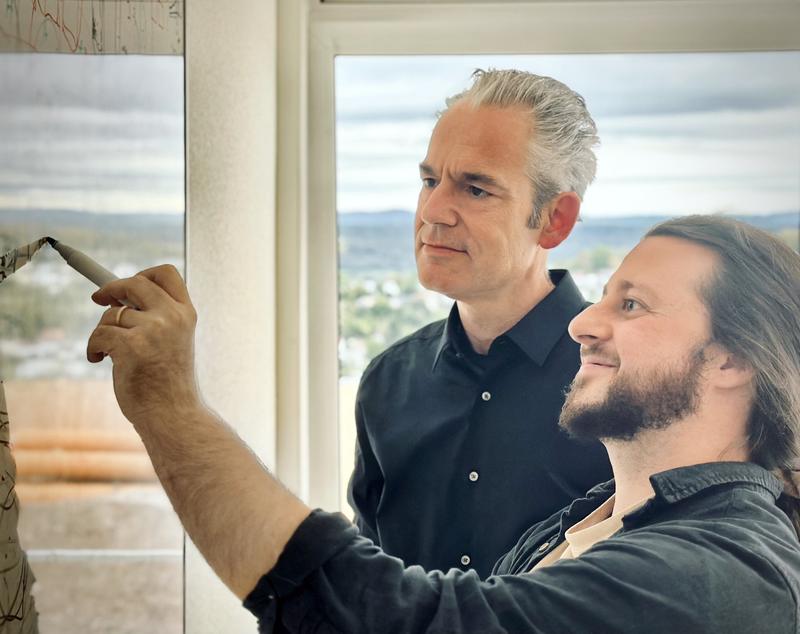
Neuroscientists in Tübingen investigate how artificial vision systems modelled on the brain can recognise images more effectively, even in the presence of visual disturbances.
Humans are usually remarkably good at recognising objects, even under poor conditions. Artificial vision systems, by contrast, reach their limits more quickly. Researchers at the Hertie Institute for Clinical Brain Research have now investigated what artificial vision systems can learn from the brain. They found that combining two brain-inspired features can make image recognition considerably more reliable. The research findings were published in Patterns, an international data science journal by Cell Press.
Vision is not a one-way street
The study focused on two questions: What makes human vision so robust, and what can artificial vision systems learn from it? Such systems use artificial neural networks, for example, to recognise objects in images. The more reliably they can do so even when visual information is degraded or incomplete, the better suited they are for use under challenging conditions.
One possible explanation for the robustness of biological vision lies in how the brain works. When we see, information does not simply travel from the eyes to the brain. Higher brain areas also send signals back to earlier processing stages, influencing how incoming sensory information is processed. Researchers refer to this as top-down feedback. Such connections are a fundamental feature of bio-logical visual systems but are not incorporated into many artificial vision systems.
Researchers at the Hertie Institute for Clinical Brain Research in Tübingen, led by Professor Markus Siegel and including first author Dr Antonino Greco, therefore investigated whether feedback becomes effective only when combined with another feature of the brain: random fluctuations in the activity of nerve cells, known as neural variability.
When randomness helps with learning
The researchers trained artificial neural networks to recognise images. They compared models with and without feedback. In addition, they simulated random fluctuations in neural activity in a simplified way by temporarily deactivating individual network units at random during training.
Feedback alone provided little benefit. Only when feedback was combined with this training procedure did the networks studied become substantially more robust to image noise and targeted changes that can cause misclassification. They also performed better on images from distributions that differed from the training distribution.
"We assumed that top-down feedback alone would be sufficient to make artificial vision systems robust. But that assumption was not borne out," says first author Greco. "Feedback only becomes effective once the network has learned to cope with randomness."
The researchers' analyses suggest that random variability prevents individual network units from becoming overly dependent on one another during learning. At the same time, it makes network activity more irregular. Feedback, by contrast, uses information from higher processing stages to organise the network's collective activity into more stable, compact patterns. The two mechanisms therefore perform different but complementary functions.
New perspectives for brain research and artificial vision systems
The researchers see these findings as a possible approach to making artificial vision systems more robust to image disturbances in the future.
"Artificial neural networks were originally modelled on the brain. However, many of today's models differ considerably from it in both structure and function," explains Markus Siegel, Head of the Department of Neural Dynamics and Magne-toencephalography at the Hertie Institute. "Our findings show that certain principles of the brain can provide new approaches to developing more robust artificial vision systems. At the same time, such models help us better understand how information is processed in the brain."
The study brings together brain research and artificial intelligence – an approach known as NeuroAI.
The research was conducted as part of Collaborative Research Centre 1233 "Robust Vision", funded by the German Research Foundation (DFG), in which research groups in Tübingen investigate why biological vision works so reliably. Other contributors included Marco D’Alessandro and Giovanni Pezzulo from the Institute of Cognitive Sciences and Technologies of the Italian National Research Council in Rome, and Karl J. Friston from University College London.
Wissenschaftlicher Ansprechpartner:
Dr Antonino Greco
Hertie-Institut für klinische Hirnforschung
antonino.greco@uni-tuebingen.de
Prof. Dr Markus Siegel
Head of the Department of Neural Dynamics and Magnetoencephalography
Hertie Institute for Clinical Brain Research
markus.siegel@uni-tuebingen.de
Originalpublikation:
Greco, A., D’Alessandro, M., Friston, K. J., Pezzulo, G. & Siegel, M.: Robust infer-ence via top-down feedback and neural variability in recurrent vision models. Patterns, Cell Press.
https://doi.org/10.1016/j.patter.2026.101693
Ähnliche Pressemitteilungen im idw
